When Fall Falls: This Is What’s Falling All Around
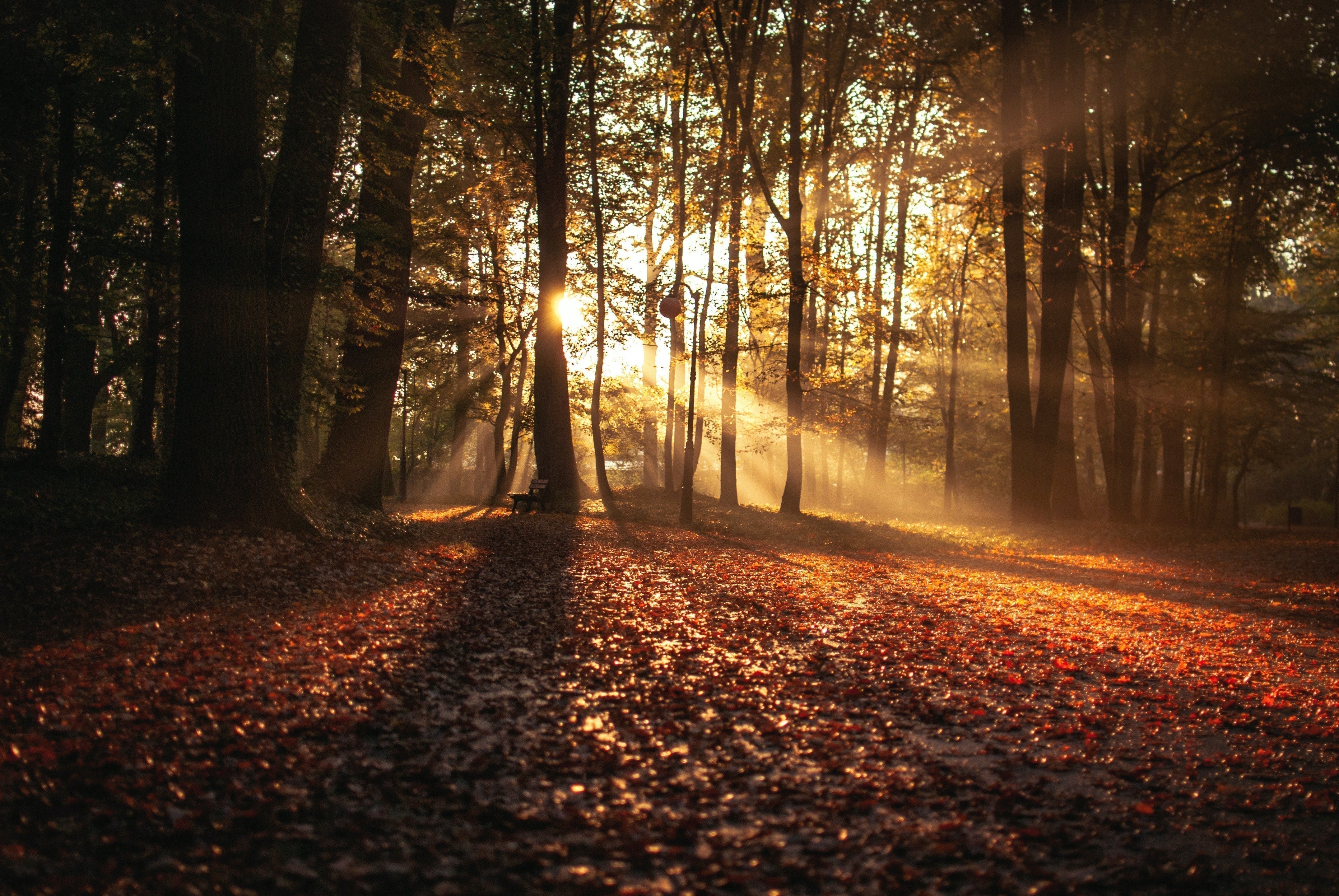
Breaking news: We’ve just had our last official summer weekends. Reading that sentence, some people shed a small tear, some people have already had their Halloween decorations up for weeks. Whichever one you are, it’s unavoidable. The air has changed, and in more ways than one.
The more people we talk to, the more we’re taken aback at just how similar the memories of the fall season are to people, especially regarding scent. Across culture, different climate zones, so many of the same words keep coming up.
Pumpkins, leaves on the ground, warm and tingly spices... whatever time of year Fall falls for you – or even if your Fall means you can still catch some waves, we wanted to perfumedly (Is that a word? Now it is.) pick apart some ingredients that you might find in the air, across the world, or in some of your favorite end-of-year bottles that you thought you knew about.
We recommend you read this with the window open, a cup of tea in hand, and see if you can periodically look up and spot the first daredevil leaves swaying to the ground.
Amber
If you go back to this blog, we touched on this briefly. Truly, this is a note that shines year round, but seems to find its wings in Fall and Winter. This is because it’s usually very warm and grounded, but can sometimes lend its magic to brighter, fresher things. Why is that?
Ok, a little secret. Amber isn’t... how do we be gentle about this... an actual thing. It’s truly what’s called a fantasy note. This means that it’s pretty much up to the individual perfumer what the note smells like – but, there are some standards. Sound crazy? Let’s explain.

So, real amber is very much an actual thing. Amber is the fossilized resin that trees and wood leak. It gets buried deep under layers of our earth, and becomes a perfect environment to preserve some creatures we thought were long gone. Ever see those articles about some strange, ancient bug that was found fossilized in amber? That’s the real stuff.
There’s no such thing as amber essential oil, and even if you were to directly burn real amber – which, you totally can, the Egyptians essentially used it as torches – it would smell tarry, smoky, and really aggressive.
The amber in your perfume is generally a formulation of labdanum (the resin from rockrose), benzoin (a resin from the styrax family of trees), and vanilla, or one of many components that make up vanilla. This creates the sweet, woody, but slightly powdery, yet gourmand, but bold, unisex note so many know and love. It’s a pretty cool and beloved perfumery trick. And thus, has become a treasured, memorable note of the season.
Isn’t it cool how a little, precise sleight of hand can weave its way into so many of our collective consciousness?
Vanilla
You’re pretty sure you know vanilla, right? Well, we’d say, don’t be so sure. True vanilla is a pretty bougie plant. Its scent is lush beyond most people’s wildest dreams, and it’s the most expensive spice, only after the ultra A-list saffron.
The cultivation of this treasured orchid is extremely labor intensive, and the fact that you even know what it is, is truly due to a 12 year old slave named Edmund Albius. In 1841, he was the one that discovered this plant can be hand-pollinated, which is how it so regularly blooms, even to this day, due to this plant’s touchy nature.
Most people’s everyday encounters of vanilla come through either baking, or manipulated notes in various fragranced products. Even with this, some still fawn over its scent, but these don’t even come close to doing its true nature justice.

And there’s not one type of vanilla either. Tahitian vanilla, Mexican vanilla, and Madagascar vanilla (aka, ‘bourbon’ vanilla) all have their very own distinct properties in flavor and scent. But ultimately, if you were to ever get your nose on some true vanilla absolute, you would smell something that is simultaneously undeniably sweet, but earthy and leathery, balsamic, woody, spiced, creamy, and often a touch smoky. If you think that sounds complex and heavenly, you’re absolutely correct. That’s why this is used in perfumes over and over again.
However, due to the insanely expensive nature of real vanilla, it’s most often not in perfumes in its totally natural state. If it were, your affordable, new favorite bottle would have been considerably less affordable. Vanillin is the principle molecule of vanilla and most likely is the vanilla note you’re smelling in your fragrance, and/or tasting in your favorite vanilla-flavored treat.
In the late 1800s, chemists Ferdinand Tiemann and Wilhelm Haarmann figured out how to synthesize this magical element, and we’ve been using it in everything we could – both flavor and fragrance - ever since.
On its own, yes, it is considerably less lush than vanilla in all its glory, but still maintains a woody, earthy, sweet, aged, and sometimes powdery, quality we have long since come to know and crave.
Vanillin also contributes to the flavor and smell (albeit in lesser amounts) of coffee, olive oil, maple syrup, and raspberries. Now, see if you can taste or smell any of it in these, and go impress your friends.
And if you’re sure you’ve smelled all there is to smell of vanilla, we dare you to watch it truly dance in Black Flower Mexican Vanilla.
Cinnamon
Cinnamon seems so simple, right? If you think this fabled bark is just that perfect little sprinkle on your latte, or just an adjective for your favorite type of roll, we definitely have some stories to tell you.

The Cinnamomum is a genus of an evergreen tree that contain intoxicatingly aromatic oils in their leaves and barks. Yes, cinnamon leaf is also a thing, and it’s a pretty beautiful and complex note and flavor (which can be used as a substitute for bay leaves). Imagine a soft, clove-like warmth, intermingling with a light muskiness, a deep, almost basil-like green, and you’ll have pretty good idea of a cinnamon leaf scent.
Mentioned as far back as 2,000 B.C, its bark, however, was so intoxicating that, sadly, some pretty brutal overtakings were involved in the war of control over the possession and production of this spice during the Spice Trades.
It was so prized, and its source so guarded, that there were fabled theories of “cinnamon birds” that collected these barks from an unknown land, and from their carefully constructed nests, that is is how all the cinnamon was collected.
Just like vanilla, there’s so much more under the surface of just one name. There are five different types of cinnamon that are well known, from Saigon, to Chinese, to Malabar, each lending their own different qualities, aromas, and flavors to the bark and leaves.
In perfume, true cinnamon oil is never actually used. That sweet heat you feel on your tongue when you taste it, is the exact same thing that happens to your skin when cinnamon alights upon it, often causing a red, slightly allergic reaction. It’s ultimately harmless, but definitely not cute.
So, perfumers use one, or a few, of the many components that make up the heavenly cinnamon aroma such as cinnamaldehyde, eugenol, or cinnamyl acetate, the use of each being regulated to avoid any potential reactions.
Cinnamon’s scent varies slightly depending on which type’s aroma you’re inhaling, but the unifying quality in them all is a nectarous, woody, peppery heat that’s less directly spicy and more comfortingly warm. Cinnamon contains within its bark over 80 different aromatic molecules, which is probably why it’s so well known as a flavor and scent explosion in and of itself.
If the idea of actually wearing cinnamon notes makes you nervous to smell like an overly perfumed grocery store pinecone decoration, consider yourself boldly challenged to wear the masterpiece of Sables and get ready to be obsessed.
Tobacco
Now isn’t this little note a polarizing word if there ever was one? To be clear, yes, we are talking about the Nicotiana genus of herbaceous plants whose leaves are used to make cigars, cigarettes, and stuffing for pipes and hookah (the latter actually uses a form that’s more of a syrupy mixture called shisha).
But what we’re talking about smells less like a crowded bar, or your grandpa’s foggy bedroom, and one phenomenally perfect fall note. To the Native Americans, this amazing herb was seen as a holy gift from the Creator, and if you’ve ever smelled good quality tobacco absolute, you’d easily see why. And don’t worry, everything is actually nicotine free in its perfume forms.

Tobacco absolute is what happens when all the aromatic materials are extracted from these leaves, resulting in a dark liquid, known to be incredibly potent and tenacious. When diluted, that’s when the magic happens, though.
In smaller amounts, tobacco absolute smells woody, balsamically sweet, slightly hay-like, and sometimes a little smoky on its own. There’s a sweetness to it often akin to dried fruits, whiskey, or caramel, depending on the type and quality of the initiating leaves.
This note is often added to exotic, ambery perfumes to give a deep and warm note of mystery, can bring out a leather fragrance like nothing else, adds some serious thorns to florals, and because it contains an animaliac quality to it as well, perfumers use it to heighten those notes too.
A note that can wear many masks, we think it’s a pretty quintessential one for this season due to its edgy and spicy, whiskey-soaked, fruited sweetness, mixed with an outdoorsy, smoky quality that screams Hot Toddys and campfires.
Don’t believe us though, give it a shot in Montabaco and see if you don’t feel simultaneously warm and fresh beyond your wildest dreams.

So, grab these scents, grab your pumpkin spiced whatever (and don’t even apologize about it), and fall into the Fall air, most likely spiced with all the above. Thank us later that you now know what they all are, just enjoy it for now.
Photo Credits: janiecbros, suti, Tetiana Bykovets, Brasil2, Susan Jones, Erik Witsoe



Leave a comment
This site is protected by hCaptcha and the hCaptcha Privacy Policy and Terms of Service apply.