
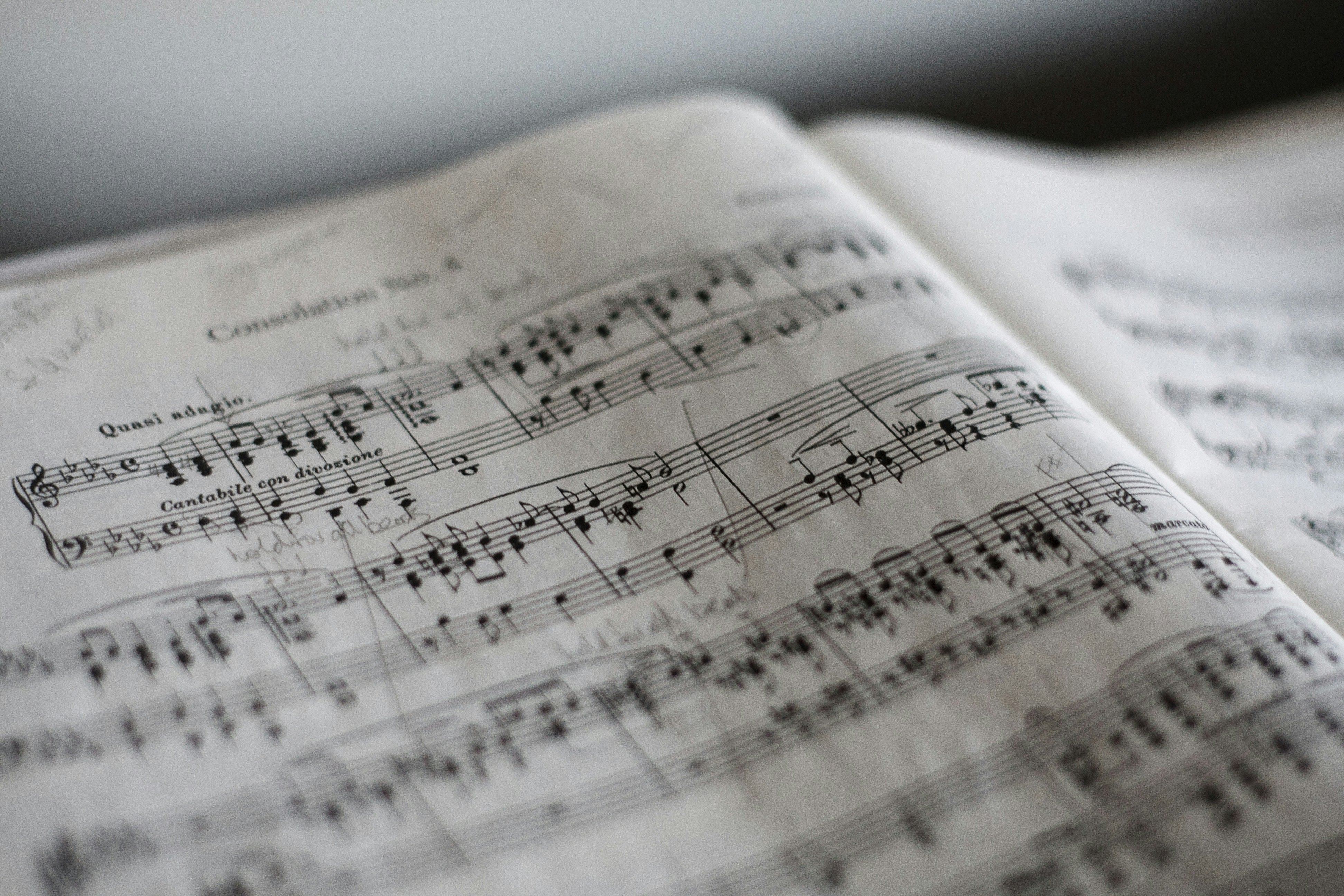
The Symphony of Scent: Understanding the Music of Your Perfume
“I really love the sillage of this eau de parfum better. The the top is fresh, but the drydown is my favorite, because of the musk accord.”
Um, say what? That’s right, we the fragrance-obsessed, talk really funny sometimes, and there truly is no readily available encyclopedia of it all to suddenly make everything less mysterious for you.
It can be a little intimidating, and for a lot of people, it’s really difficult to talk about something that, by nature, is invisible. But once you have the words for it, you start to notice things more. And once you notice things more, your favorite scent becomes even better.
So, we’re about to teach you to not only realize how your fragrance does, or can, behave over time, but how to talk about the music of it all, and what all these crazy terms mean. Let’s dive into the 3 main parts of your perfume first, as well as the meaning of two really important words. For those of you that know music, you’ll feel right at home.
Notes
You’ve certainly seen lists of “notes” after a perfume description. Some words you may recognize, like vanilla, rose, leather, and so on, while some can be a little more exotic, like champaca, or olibanum.

These are essentially the aspects that make up a perfume, much like your favorite song sounding so great, because of a precise combination of the perfect notes. But while in music, notes are clearly defined (a B note will always sound like a B note), it’s not always correct to read a note list as if it’s an actual ingredient list.
Unlike in music, perfumers (the composers, if you will) can take liberties with their interpretations, and that “lavender” note may or may not have much lavender at all within it. Keep this in mind as you smell, and look over, a scent for the first time. Try to get a sense of how this particular perfume is blending and manipulating these notes you’re being told about.
Believe it or not, some materials don’t even have a scent once you try to extract their oils, and have to be artistically built from scratch – like a lot of people’s favorite flower, gardenia. Plot twist, huh? Good perfume is full of drama. If you need an interpretive note out of thin air, this next word is where it’s at.
Accords
Let’s say a perfumer wants, or needs, to make something of their very own, a scent aspect from scratch. They would combine various materials and notes to make, let’s say, the gardenia note above.
Much like if you took a piano and played a G, a B, and a D note at the same time, you’d have a beautiful G chord, the perfumer’s effort at combing all their notes together would make a gardenia accord. And if you noticed that, yes, sometimes something that’s listed as a note functions a little more like an accord, you get some expert-level bonus points.
So, notes are individual parts of a perfume, which might be interpretive - or the actual ingredient - and a combination of materials or notes, in order to make a said effect, is an accord.
This is why accords can actually be listed as part of the notes, because its just a bunch of other materials that come together to make one effect. You’ll never truly know which is which, because that’s part of the magic.

The Top
The top of a perfume is just a simple word to denote the first thing(s) you smell when you spray the perfume. Let’s call this the first measure.
This intro is composed of a bunch of top notes, which are usually bright and fleeting things like citrus, aldehydes - which are molecules that give off a clean and sparkling sensation upon smelling them, some lighter florals, and so on.
Words you can use to describe the top are often words like bright, sparkling, fresh, bubbly, soapy, and radiant.
These top notes rush out of the bottle and give you the first impression, reel you in, and start to fade away like a really cool guitar riff right before you get to the verses, which would be...
The Middle
This is the meatier middle sensation of a perfume, the second measure, maybe where the verses come in, and you get to see what this story is really about.
Here is where you’ll find the middle notes, also known as the heart notes – things like richer florals, aquatic notes, green notes, and even some gourmand (food-oriented) notes – that make the axis of your perfume, and hold everything together.
Heart notes vary widely and can be described in a myriad of ways, so see if the scent you’re smelling is narcotic, sensual, sweet, juicy, blooming, powerful, leafy, gentle, spicy or even dirty.

You an even think of this as the chorus of your perfume, the center of the story that you keep coming back to. It unifies your fragrance and is often the turning point into something more lush and dense. Something like...
The Base
The reason people compose, perfume or music, is so other people can experience it and be moved by it. Music has a bunch of terms for how loud something plays, or how softly, or how intense a part needs to sound.
Likewise, perfumes have different concentrations, and these can all affect how someone else experiences your perfume, and the trail you leave behind, which is called the sillage (see-YAHJ). This is your smell volume, and we’ve all stood next to that person who has it turned up to 10.
Maybe they didn’t know those weird little phrases on your bottle tell you something about how this perfume in front of you is about to be played to the audience. These are:

Cologne/Eau De Cologne: about 2-5% concentration of scent materials, these tend to be lighter, softer, fresher things you can splash on generously for a little pick-me-up
Eau De Toilette: about 5-10% concentration, these stick around a little longer, but were made to eventually fade out, like the end of a 90s song. However, some EDTs can still be quite strong.
Eau De Parfum: about 10-20% concentration, for a deeper, all day wear with some noticeable potency
Parfum/Extrait: 20%+ concentration, these are the ones that usually come in tiny bottles as they are so concentrated, the expectation is that you would never need to use a lot. These can be made to wear softer, but linger all day, and some can announce their arrival like a gong.
Now, there are no laws for the above numbers, or any creed that says what something has to be labeled as, so let your nose be your ultimate guide about whether a scent works for you the way you like it to, or not. You’re actually the conductor in this symphony.
The Finale
Go back up to the top again, and see if you can now make sense of that crazy sentence. Since you’re a conductor now, if you’re being told to go back to the beginning, that’s called a da capo, or abbreviated D.C., if you ever read sheet music. And if you can understand our intro, congratulations, you may now start talking like a perfume snob too.
But really, you’re now able to start noticing the nuances of your favorite scent, describe them out loud, and make an educated guess of how your next scent may behave. Maybe. Good perfumers always have tricks up their sleeve.
The symphony is so much more interesting when you know what the notes mean, and can guess how they’re about to be played.
So go see what you notice, and we’ll see you in the front row.
Photo Credits: Marius Masalar, Katherine Hanlon, Fulvio Ciccolo, Tabitha Turner



Leave a comment
This site is protected by hCaptcha and the hCaptcha Privacy Policy and Terms of Service apply.