
For the Love of Patchouli
Patchouli can be identified by most with a single sniff. Even if they can't name it as patchouli, they can recognize the smell. This strong note – a little like wet earth – is arguably one of the most recognizable scents in the world, as well as one of the most divisive.
But what is it? Where did it come from and how did it come to be most closely associated with the late 1960s hippie movement?

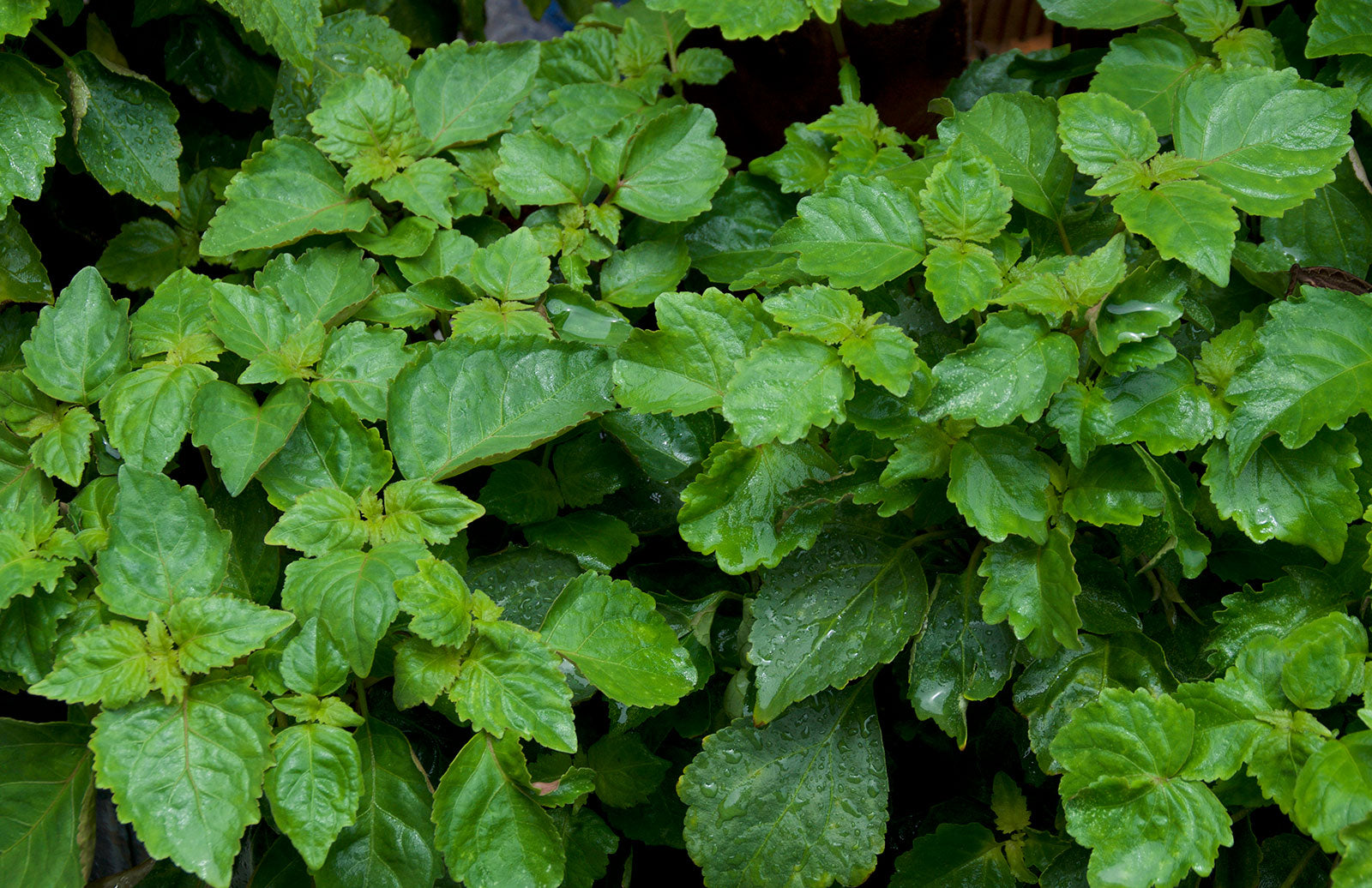
Let’s start at the beginning. Patchouli comes from a species of plant in the Lamiaceae family, commonly called the mint or deadnettle. That's right, it's not a wood or even a root, it's in the mint family, called by its scientific name, Pogostemon Cablin. The busy herb features pale pink flowers. The plant is grown in many different places, including China, Japan, Cambodia, India, Pakistan, Thailand, South America and the Caribbean. The scent is extracted from the plant through steam distillation of its leaves, which can also be eaten, used as a seasoning or soaked and drunk as a tea.
Patchouli was mentioned in ancient Egypt – several gallons of it was said to be buried with King Tut – and in Rome, as well as in trade with European explorers. Many cultures believed patchouli has aphrodisiac properties and it was used to treat skin inflammations and scars, headaches, colic, muscle spasms, bacterial and viral infections. In our more modern times, patchouli essential oil has been known to help with a variety of ills, from headaches to depression.
In the mid- to late-1800s, dried patchouli leaves were tucked into the folds of Indian textiles to deter moths, impregnating them with an unmistakable, musky aroma,” writes Kathryn Hindess in a Lush blog post. “And in Victorian Britain, Indian shawls were all the rage, so the ubiquitous scent soon became symbolic of luxury, as well as the mark that distinguished a material of Indian origin.”

A century later, nascent hippies brought the scent of patchouli back with them after backpacking across Asia, launching a trend that became an integral part of the Flower Power movement. The fact that it masked the smell of marijuana likely played a role in its growing popularity, too.
In addition to being used on its own, patchouli has been blended with seemingly every other note you can think of to create perfumes as unique as the flower children who made it popular.
The deep, dark and earthy notes of patchouli oil mixes well with many other perfumery ingredients. Aromatically speaking, it can go in many directions: sweet, spicy, smoky, and woody. Often found blended with vetiver, sandalwood, frankincense, bergamot, cedarwood, myrrh, jasmine, rose and citrus oils. Put it with vanilla, caramel or chocolate for a sexy and sweet concoction.
This polarizing ingredient can be displayed in so many ways. The vision of the perfumer always laying behind it. The note’s diversity is on display in the June 2020 Collection. Find patchouli's freshness in Olfactory NYC’s Dylan and then in the base of the fruity, crisp Pineapple Royale by Montagne Parfums. Pineapple and patchouli? Find that in Tamarindo by Memo Paris.
Want to try a pure patchouli or use it for layering? Give Patchouli by the iconic French house, Molinard, a spritz. Looking for a heady, musky patchouli? Try Ambre Nomade by Elsire. Want a wet, metallic patchouli? Try LED IV by Jazmin Sarai, you'll find it there.


Leave a comment
This site is protected by hCaptcha and the hCaptcha Privacy Policy and Terms of Service apply.